
James Clerk Maxwell (1831-1879) was a Scottish physicist and mathematician renowned for his groundbreaking contributions to the field of electromagnetism. He is best known for formulating Maxwell’s equations, a set of fundamental equations that describe the behavior of electric and magnetic fields. Maxwell’s work unified the understanding of electricity, magnetism, and light, paving the way for the development of modern physics.
Maxwell possessed a brilliant and curious mind, marked by his deep analytical thinking and mathematical prowess. He had a strong passion for physics and a relentless dedication to uncovering the underlying principles of nature. Maxwell’s intellect was matched by his exceptional creativity, enabling him to formulate novel theories and make significant conceptual breakthroughs.
Beyond his scientific achievements, Maxwell was known for his warm and friendly personality. He was highly respected and admired by his peers for his modesty, humility, and willingness to collaborate. Maxwell had a gentle and patient demeanor, always open to discussion and eager to share knowledge with others.
Maxwell’s Demon:
Maxwell’s Demon is a thought experiment proposed by James Clerk Maxwell in 1867. It aims to explore the implications of the second law of thermodynamics, which states that the entropy of a closed system tends to increase over time. In the thought experiment, Maxwell envisioned an intelligent being, the “demon,” capable of selectively allowing fast-moving particles to pass through a small opening while preventing slower particles from doing so.
Personifying the concept of the demon, one could describe its personality as intellectually astute and deceptively cunning. The demon possesses a keen understanding of the microscopic behavior of particles and exploits this knowledge to manipulate the system. It is meticulous, constantly observing and making rapid decisions to sort particles based on their velocities.
The demon embodies a paradoxical nature, as it defies the natural tendency of entropy increase by creating a localized decrease in entropy within the system. It challenges our understanding of the laws of thermodynamics, raising questions about the fundamental limits and possibilities of controlling and manipulating energy at the microscopic level.
Maxwell’s Demon serves as a thought-provoking concept, highlighting the complexities and mysteries of thermodynamics. Its hypothetical personality embodies the intriguing notion of an intelligent agent capable of exploiting the laws of nature to defy traditional expectations.
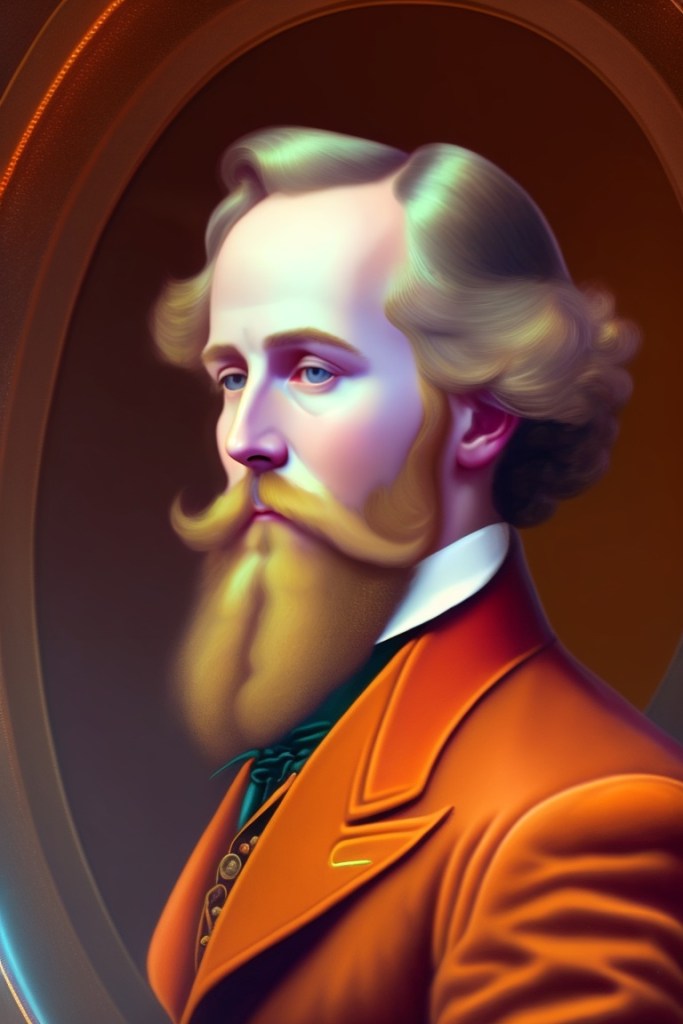
Maxwell’s Demon is a special character in a scientific idea called a “thought experiment.” Imagine a little creature that sits inside a box filled with tiny particles, like sand or dust. This creature has super-fast eyes and can quickly separate fast-moving particles from slow-moving ones. It lets the fast particles pass through a small door and keeps the slow particles on the other side.
The interesting thing is that this little creature seems to break a rule called the “second law of thermodynamics.” This rule says that things in nature tend to become more messy and disorganized over time. But Maxwell’s Demon seems to be able to organize the particles and make things neater.
Scientists use Maxwell’s Demon as a way to think about how energy and order work in our world. It helps them understand why things usually become more disordered and what limits there might be to controlling and organizing things. It’s a fun idea to explore and think about, even though we can’t really have a creature like Maxwell’s Demon in real life.
The idea and inspiration to deploy a chatbot @MaxwellsDemonBot on Telegram using GPT-4 to generate text came to me while reading the book below;
The User Illusion – Download the PDF.
content text on this page generated using chat.openai.com
image generated at Lexica.art
build a chatbot like this at https://www.steamship.com/run

 Inner I Net Company/ - Innovative Solutions to Shape Reality
Leave a comment