The worlds of imagination and science may appear to be on opposite ends of the intellectual spectrum, but in reality, they are closely intertwined, each fueling the other’s progress and innovation. In this blog, we will embark on a journey to explore the fascinating relationship between the imagination of science and the science of imagination.
Imagination in Science
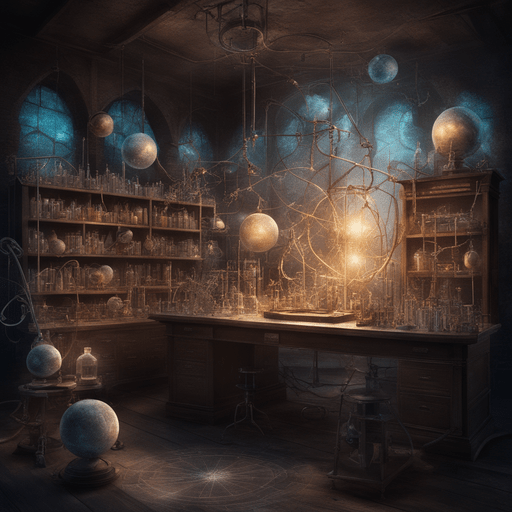
PlaygroundAI.com “Mystical lab for the Imagination of Science.”
- The Spark of Discovery: Imagination serves as the spark that ignites scientific discovery. It often begins with a scientist’s ability to envision possibilities beyond the known, sparking curiosity and exploration.
- Hypothesis Formation: In the scientific method, the formulation of hypotheses is a creative act rooted in imagination. Scientists imagine potential explanations for phenomena and then design experiments to test these ideas.
- Visualization and Models: Scientists use imagination to create mental images and models of complex systems, allowing them to make sense of data and generate new theories.
- Innovation and Problem-Solving: Imagination plays a crucial role in innovation and problem-solving, leading to breakthroughs in technology, medicine, and various scientific fields.
The Science of Imagination
- Neuroscience: The science of imagination examines how the brain processes and generates creative thoughts. Studies in neuroscience shed light on the neural networks responsible for imagination.
- Cognitive Psychology: Cognitive psychology explores the mechanisms behind imagination, including memory, perception, and mental imagery.
- Creativity Research: Scientific research on creativity delves into the conditions and factors that enhance imaginative thinking, fostering a deeper understanding of how to cultivate and harness it.
- AI and Computational Creativity: Advances in artificial intelligence have led to the development of AI systems that can simulate creative thinking and generate imaginative content.
The Synergy
- Innovation and Progress: The synergy between imagination and science fuels innovation and drives progress. From Einstein’s thought experiments to the imaginative design of revolutionary technologies, imagination propels science forward.
- Cross-Disciplinary Insights: Imagination bridges the gap between scientific disciplines, enabling researchers to explore uncharted territories and draw insights from diverse fields.
- Inspiration and Communication: Imagination enhances the communication of scientific concepts to the public. Creative storytelling and visualization help convey complex ideas in relatable ways.
- Ethical Considerations: The science of imagination raises ethical questions about the potential consequences of scientific advancements. Imagining the future allows us to consider and address potential risks and benefits.
Sparks Flying
Imagination and science are not adversaries but partners in the pursuit of knowledge and progress. The imagination of science sparks curiosity, innovation, and discovery, while the science of imagination delves into the inner workings of creative thinking. Together, they form a dynamic duo that propels human understanding and drives advancements in every field of scientific endeavor. As we continue to nurture and explore this symbiotic relationship, we unlock the limitless potential of both imagination and science to shape the future of our world.
article prompt engineuro: OpenAI
image at PlaygroundAI.com “Mythical Greenhouse for the Imagination of Science.”
our present Products
Stay in the NOW with Inner I Network;

 Inner I Net Company/ - Innovative Solutions to Shape Reality